

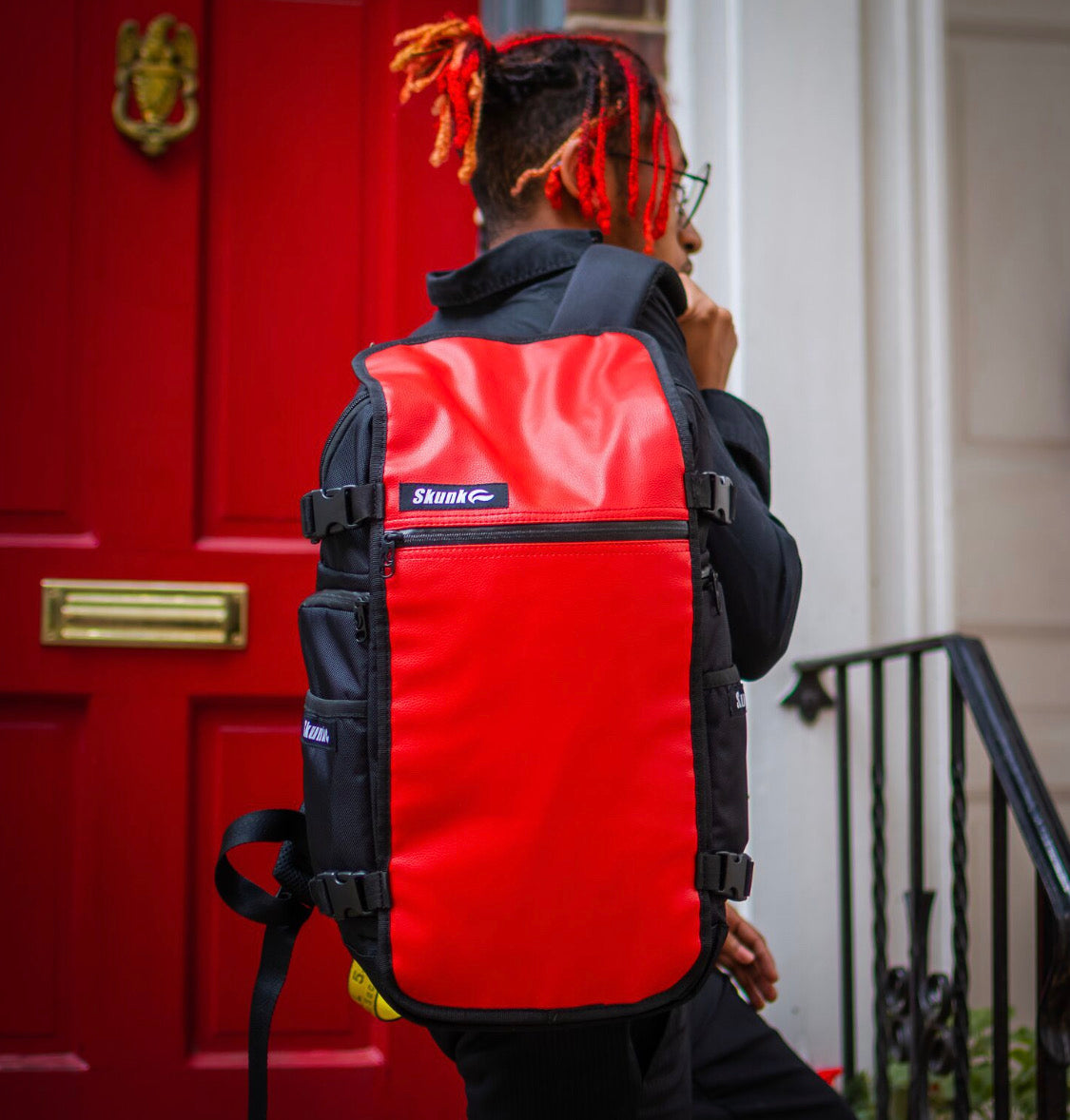
Traveling is meant to be liberating, but the wrong backpack turns freedom into frustration fast. Plenty of buyers settle for bags that look stylish but fail where it counts: odor containment, durability, security, and usability. A smell proof travel bag isn’t just about discretion it’s about comfort, reliability, and peace of mind. Here are the most common buying mistakes, and how Skunk’s system avoids each one.
Mistake 1: Settling for Thin or Generic Carbon Lining
Plenty of bags claim to be “odor-proof.” The catch: generic carbon fabric leaks over time. It may mask smells briefly, but it doesn’t truly adsorb them and once its limited pore structure fills up, it stops working.
The Skunk fix: SK9 Tech® with the CarbonClean® formula
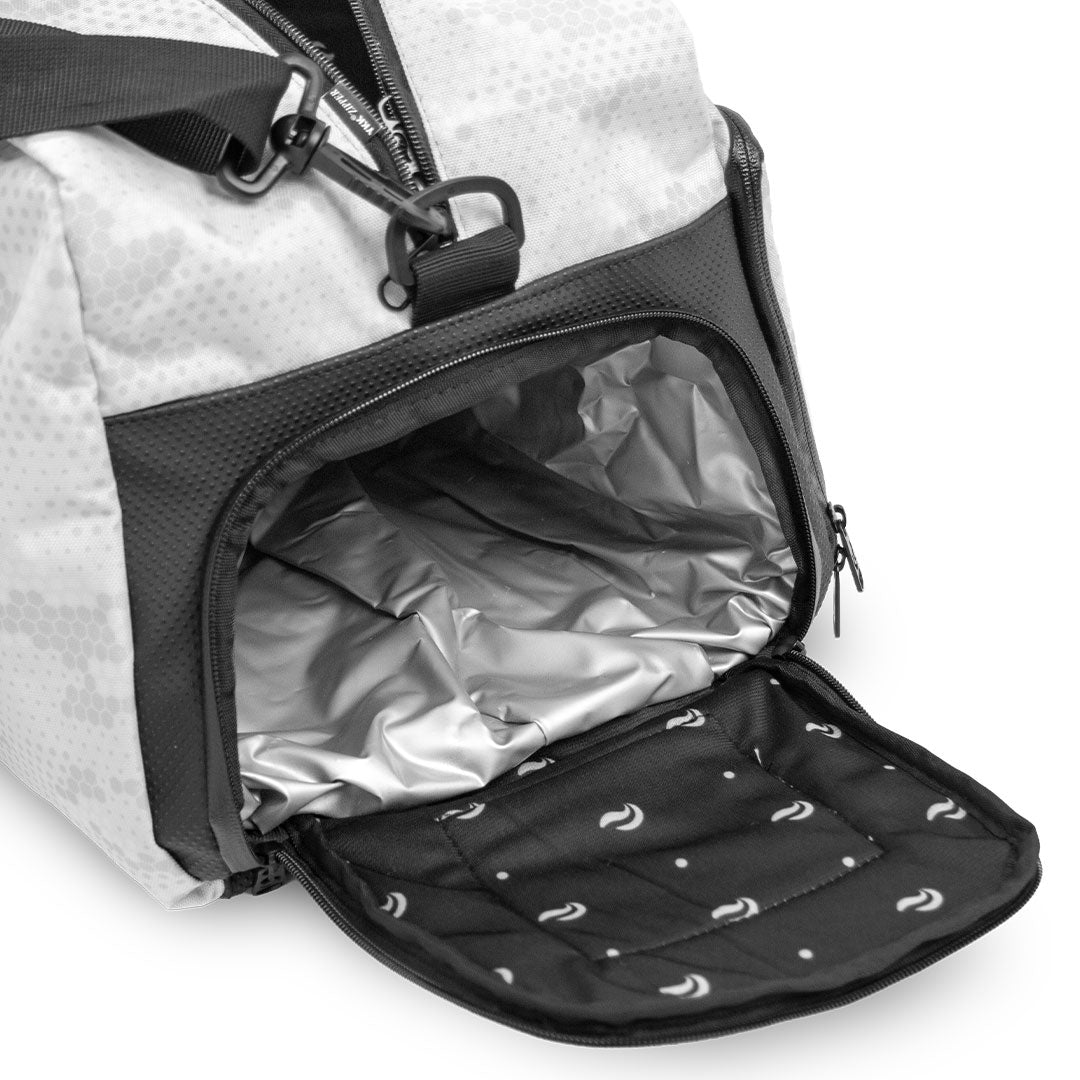
Skunk’s SK9 Tech® odor-control system is built on the CarbonClean® activated-carbon formula a purpose-built carbon felt with an ROA of ~1,500 m²/g (2–3× the surface area of generic carbon fabric). Its microscopic pores adsorb odor molecules (a mechanism documented in the journal Carbon), trapping odor inside the bag rather than covering it. And Skunk’s CarbonFlow® lining lets air reach the carbon while keeping loose carbon dust off your laptop and gear the problem most carbon bags never solve. That’s true in-bag containment.
Example: The Nomad pairs the SK9 Tech® interior with a dedicated laptop compartment a professional, discreet travel companion.
Mistake 2: Ignoring Security
Many travelers overlook locks, assuming zippers alone are enough. In crowded airports, hostels, or festivals, a backpack without a lock is an open invitation.
The Skunk fix: an integrated combination lock and a TSA-ready option for flying
Most Skunk backpacks include a combination lock built into the double zippers, so you can secure your belongings without a separate padlock. And when you’re flying, Skunk’s Escape travel bag steps up with a TSA-ready combo lock so airport security can inspect it without cutting the lock or damaging the zippers.
Example: For a lockable everyday pack, the Nomad combines the SK9 Tech® interior with a built-in combo lock; for air travel specifically, the Escape is the TSA-ready pick.
Mistake 3: Choosing Weak or Generic Zippers
Zippers are usually the first failure point in a cheap backpack they snag, break, or leave gaps that compromise both odor containment and security.
The Skunk fix: YKK zippers
Skunk uses YKK zippers, the reliability standard smooth, durable, and built to last for years. Paired with the rubber-backed shell, they form a sealed closure that supports both odor control and water resistance. A smell-proof system is only as strong as its opening.
Example: The Urban uses YKK zippers throughout, so it stays secure and functional even after heavy travel use.
Mistake 4: Picking the Wrong Size
Travelers often misjudge how much space they need. Too small and you’re carrying extra luggage; too large and the bag becomes bulky and uncomfortable.
The Skunk fix: a real range of sizes
Skunk offers sizes for different needs from compact daypacks to larger travel packs each balancing portability with storage.
Example: The Mini handles light-carry days, the SOHO is a sleek professional pack with a padded laptop pocket, and the Faceoff® line adds customizable styling — so you can match capacity to the trip without giving up the smell-proof interior.
Mistake 5: Overlooking Water Resistance
A common assumption is that odor-proof lining means water resistance. It doesn’t carbon lining does nothing against rain or spills. Without the right shell, your belongings are exposed.
The Skunk fix: rubber-backed shell
Skunk bags use a rubber-backed shell (a rubberized layer bonded to the outer canvas) that resists rain and spills, and also helps seal odor in. Water resistance comes from the shell; odor control comes from the carbon two jobs, handled by two parts of the bag. (Water-resistant, not waterproof great against rain and spills, not for submersion.)
Example: The Rogue combines the SK9 Tech® interior with the water-resistant shell a solid pick for unpredictable conditions.
Why Skunk Bags Stand Apart
Every Skunk backpack is designed for daily use, comfort, and durability. The combination of SK9 Tech® carbon (CarbonClean® formula + CarbonFlow® lining), an integrated combination lock, YKK zippers, and a rubber-backed shell addresses the exact mistakes most buyers make:
- Odor containment: CarbonClean® carbon adsorbs odor into microscopic pores; CarbonFlow® keeps the dust contained.
- Security: a combination lock on most bags; a TSA-ready lock on the Escape travel bag.
- Durability: YKK zippers built to last.
- Weather resistance: a rubber-backed shell keeps rain and spills out.
Buy Smart, Travel Smarter
A travel backpack is your mobile home for the journey the wrong one means leaks, theft, broken zippers, or soggy gear. Skunk engineers around the problems most travelers overlook, so whether you’re heading to a festival, catching a flight, or hitting the road, your essentials stay secure, dry, and discreet. Don’t fall for the common pitfalls choose a smell proof travel bag built for real-world travel.
Explore the full range at SkunkBags.com.
FAQ
What’s the most common mistake when buying a travel backpack?
Settling for thin, generic carbon lining. It masks odor briefly but leaks over time. Look for a real activated-carbon formula — Skunk’s CarbonClean® is tuned to ROA ~1,500 m²/g, 2–3× generic fabric — with a lining that also keeps carbon dust off your gear.
Do Skunk travel backpacks have a TSA-ready lock?
Most Skunk backpacks include an integrated combination lock on the double YKK zippers. For air travel specifically, the Escape travel bag adds a TSA-ready lock so security can inspect it without cutting the lock.
Does the carbon lining make the bag waterproof?
No. Water resistance comes from the rubber-backed shell and sealed zippers; the carbon handles odor. Skunk bags are water-resistant, not waterproof.
What size travel backpack should I get?
Match it to the trip: the Mini for light carry, the SOHO for a professional laptop pack, larger packs like the Nomad for travel days. Too small means extra luggage; too large gets bulky.
How long does the odor protection last?
With normal use and care, the carbon typically stays effective for about 6–9 months per cycle, then can be re-activated with gentle heat.


Leave a comment
This site is protected by hCaptcha and the hCaptcha Privacy Policy and Terms of Service apply.