

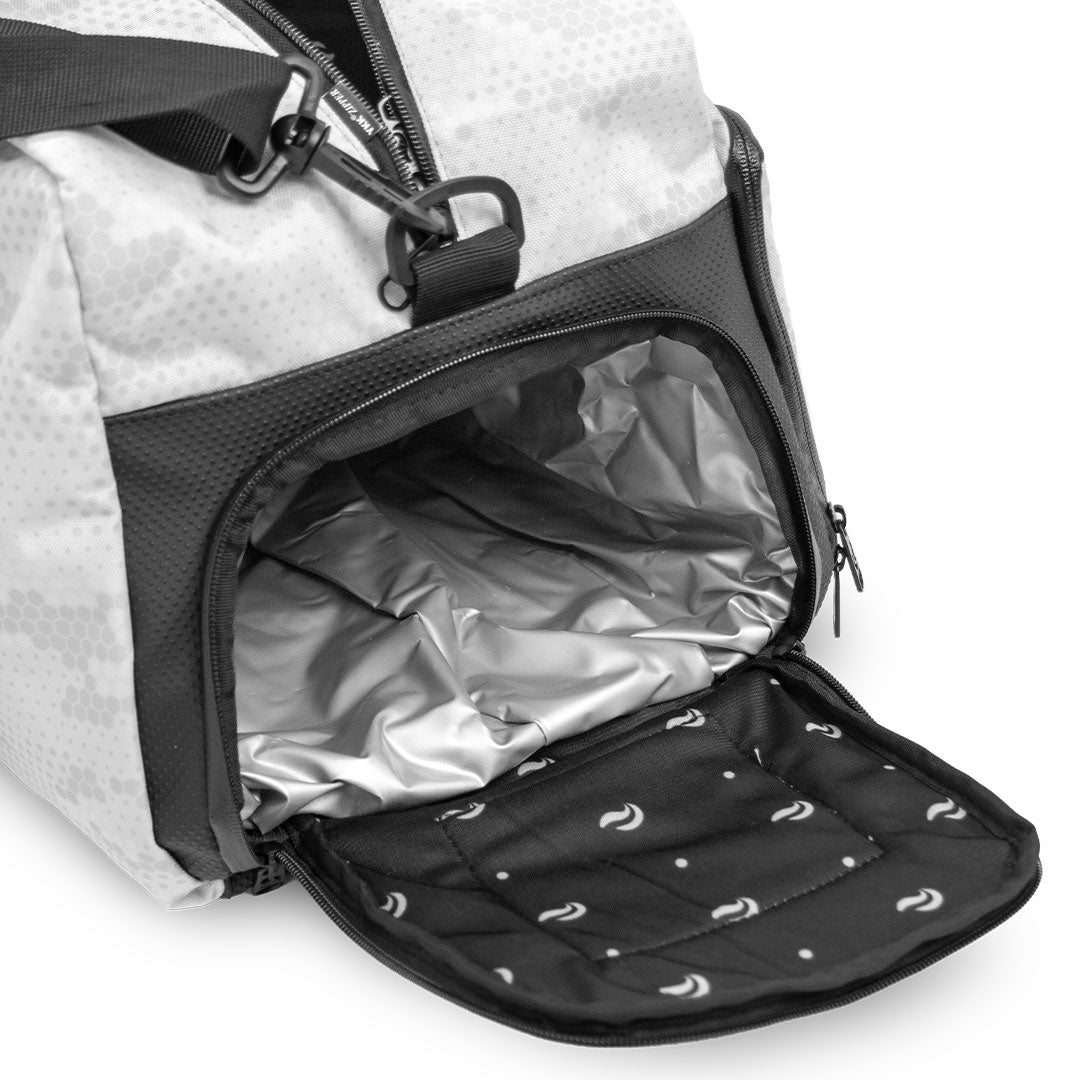
Odor control used to be guesswork a spritz of air freshener, a plastic baggie, a mint tin repurposed for something it was never meant to hold. Then came the carbon lined bag, and the conversation shifted from masking smells to actually trapping them at the molecular level. But not all carbon linings are equal, and understanding the difference is the whole point of this piece.
The Problem With “Smell-Proof” Marketing
Scroll any marketplace and you’ll see “smell-proof” slapped on bags with a thin, generic carbon fabric stitched behind a nylon shell. The uncomfortable truth: generic carbon fabric leaks over time. Low-grade carbon has a fraction of the surface area needed to hold odor molecules long-term, and once its limited pore structure fills up, it simply stops working often within weeks of regular use. The bag still looks the part. It just quietly fails at the one job it was bought for.
That’s why surface area matters far more than marketing copy and it’s the entire premise behind how Skunk engineered its system from scratch.
What Actually Happens Inside a Carbon-Lined Bag
If you’re asking “activated carbon bag how it works,” the science is genuinely elegant. Activated carbon isn’t a filter the way a coffee filter is it doesn’t block particles by size. It works through adsorption: odor molecules physically adhere to the surface of countless microscopic pores riddling the carbon’s structure (a mechanism documented in the journal Carbon). Air moves through the material, odor compounds get pulled in and held inside those pores, and what remains is stripped of the compounds that triggered your nose.
The catch: this only works as well as the carbon’s pore density allows. More surface area means more places for odor molecules to land and stay put which is exactly where Skunk’s carbon formula enters the picture.
CarbonClean®: The Carbon Formula Doing the Real Work
“Activated carbon” on a label means very little on its own it comes in many grades, and cheap versions barely perform. Skunk’s CarbonClean® is the answer: a purpose-built carbon felt tuned to a tested concentration, with a residual-odor-adsorption (ROA) rating of roughly 1,500 m²/g about two to three times the surface area of the generic carbon fabric in bargain-bin “smell-proof” bags. More pore surface means odor molecules have dramatically more real estate to adsorb into before the material reaches capacity.
Be precise about what it does: it doesn’t mask odor with fragrance, and it doesn’t rely on a perfect, absolute barrier. It contains odor by physically trapping it inside the bag, at the molecular level a more durable mechanism than spraying perfume over a problem.
CarbonFlow®: Airflow In, Carbon Dust Stays Put
Carbon is only as good as the system that puts it to work and here’s the problem almost every carbon bag has, including Skunk’s own early designs. Carbon is a powder. Any lining porous enough to let odor reach the carbon is usually porous enough to let loose carbon dust leak back out onto your laptop and gear.
CarbonFlow® is Skunk’s fix: a one-directional interior lining engineered so air flows in to reach the carbon and returns clean, while a fuzz-textured barrier on the carbon-facing side holds the dust back. Instead of odor skating past a thin panel or dust shedding into your bag CarbonFlow® routes air toward the pores where odor gets trapped and keeps the carbon contained. That’s the difference between a lining that looks impressive and one that actually performs, cleanly.
Rubber-Backed Shell & YKK Zippers: The Other Half of the System
Odor containment is one job; durability and weather resistance are another and it’s important not to blur them. The rubber-backed shell (a rubberized layer bonded to the outer fabric) is what gives Skunk bags structure and resistance to rain and spills. Water resistance comes from the shell; odor control comes from the carbon. Two systems, working together.
And the zippers: Skunk uses YKK zippers, the reliability standard trusted across outdoor and travel gear smooth action, consistent closure, and a track record of holding up to daily wear. A smell-proof system is only as strong as its opening.
Put together CarbonClean® carbon, CarbonFlow® lining, rubber-backed shell, YKK zippers you get a complete, in-bag containment system under the SK9 Tech® name. It’s the whole system that makes these bags work, not any single miracle material.
Giving Carbon a Second Life: Re-Activation and Realistic Lifespan
Even high-ROA carbon isn’t infinite. Over months of use, pores gradually fill and performance tapers normal for any adsorption material, not a defect. The good news: activated carbon can be refreshed with gentle heat, which releases trapped compounds and restores adsorption capacity. In practice, expect roughly 6–9 months per cycle depending on use, then re-activate.
Realistic lifespan depends on how the bag is used and cared for frequency of exposure, how well it’s sealed between uses, and whether it gets occasional heat-refresh cycles. Treated like any performance gear, it keeps performing for a long time.
Why 2026 Is the Year of the Carbon-Lined Bag
Three currents are converging. First, discretion has become a genuine lifestyle value people want everyday carry that doesn’t announce its contents. Second, sustainability-minded buyers prefer a reusable, rechargeable system over disposable bags and jars re-activation means one product replaces a pile of single-use alternatives. Third, normalization: carbon-lined gear has moved out of niche territory into mainstream everyday carry commuting, travel, gym, studio. Expect that shift to keep accelerating through 2026.
Skunk Backpacks That Put the Science to Work
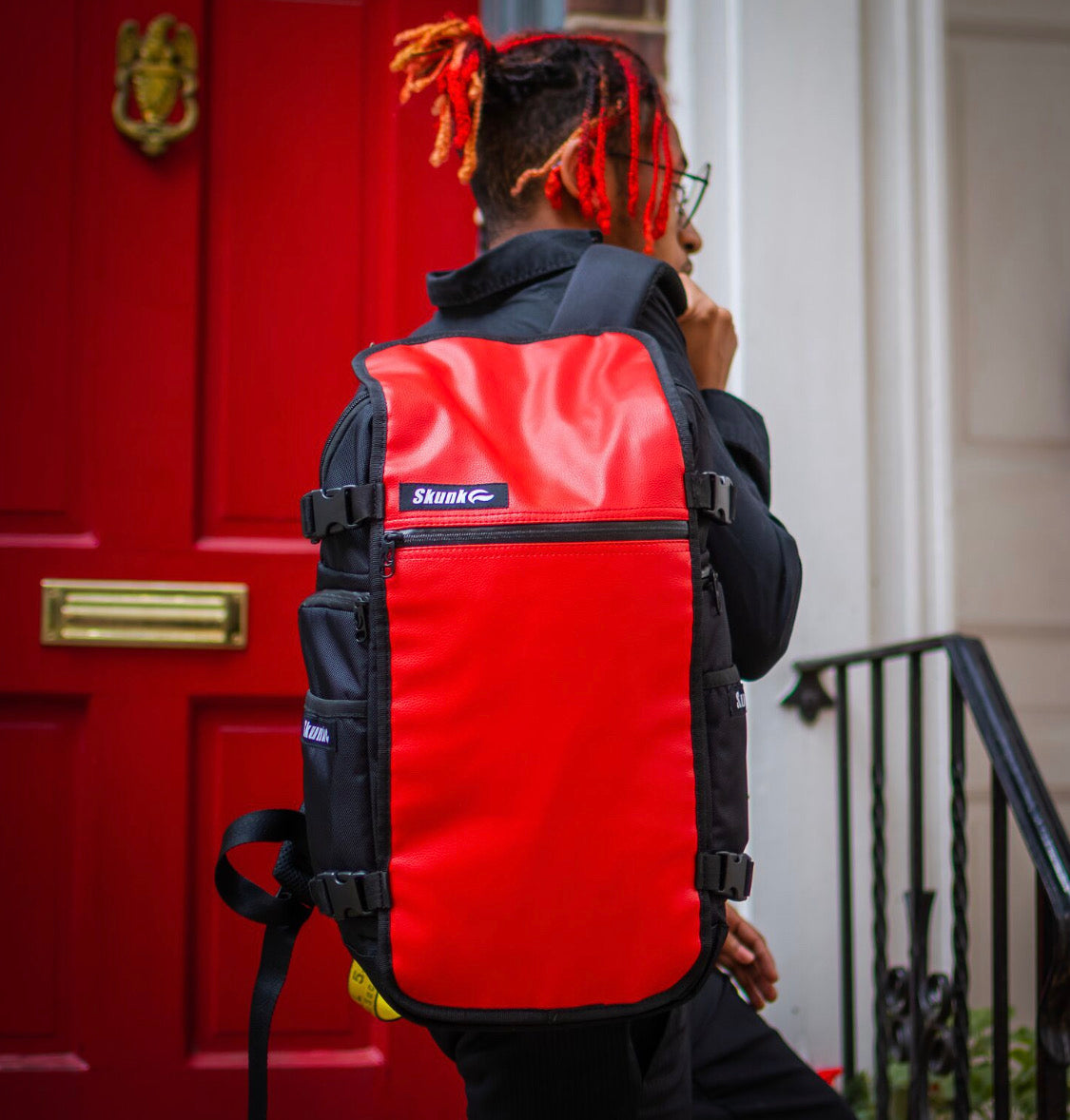
The SK9 Tech® system runs across the whole lineup, whatever size fits you: the Mini for light carry, the Element for a classic everyday pack, the Nomad for travel days, the Rogue for a do-everything medium pack, and the Raven among the streetwear-styled options. Same CarbonClean® / CarbonFlow® containment system, different formats.
Explore the full range at SkunkBags.com.
FAQ
How does an activated carbon bag work?
It works by adsorption, not filtration. Odor molecules physically adhere to the surface of microscopic pores in the activated carbon; air passes through and comes out stripped of the compounds you’d smell. The more pore surface area the carbon has, the more odor it can hold.
What is CarbonClean® and what does ROA 1,500 m²/g mean?
CarbonClean® is Skunk’s activated-carbon formula. ROA (residual odor adsorption) ~1,500 m²/g is a measure of surface area per gram roughly 2–3× that of generic carbon fabric which is why it keeps trapping odor far longer before reaching capacity.
Does the carbon leak dust onto my things?
Not in a Skunk bag. Carbon is a powder, and most carbon bags leak dust as the lining wears. Skunk’s CarbonFlow® one-way lining lets air reach the carbon while a fuzz-textured barrier holds the dust back so it stays off your laptop and gear.
How long does a carbon-lined bag last, and can it be refreshed?
Adsorption typically stays effective for about 6–9 months per cycle depending on use, then the carbon can be re-activated with gentle heat to restore capacity so the bag keeps performing long-term rather than being thrown away.
Is a carbon-lined bag actually “smell-proof”?
It delivers reliable in-bag containment odor is trapped inside the bag during everyday use. It’s not a claim that zero smell ever escapes under any condition; it’s molecular-level trapping via activated carbon, which is a far more durable approach than masking with fragrance.


Leave a comment
This site is protected by hCaptcha and the hCaptcha Privacy Policy and Terms of Service apply.