

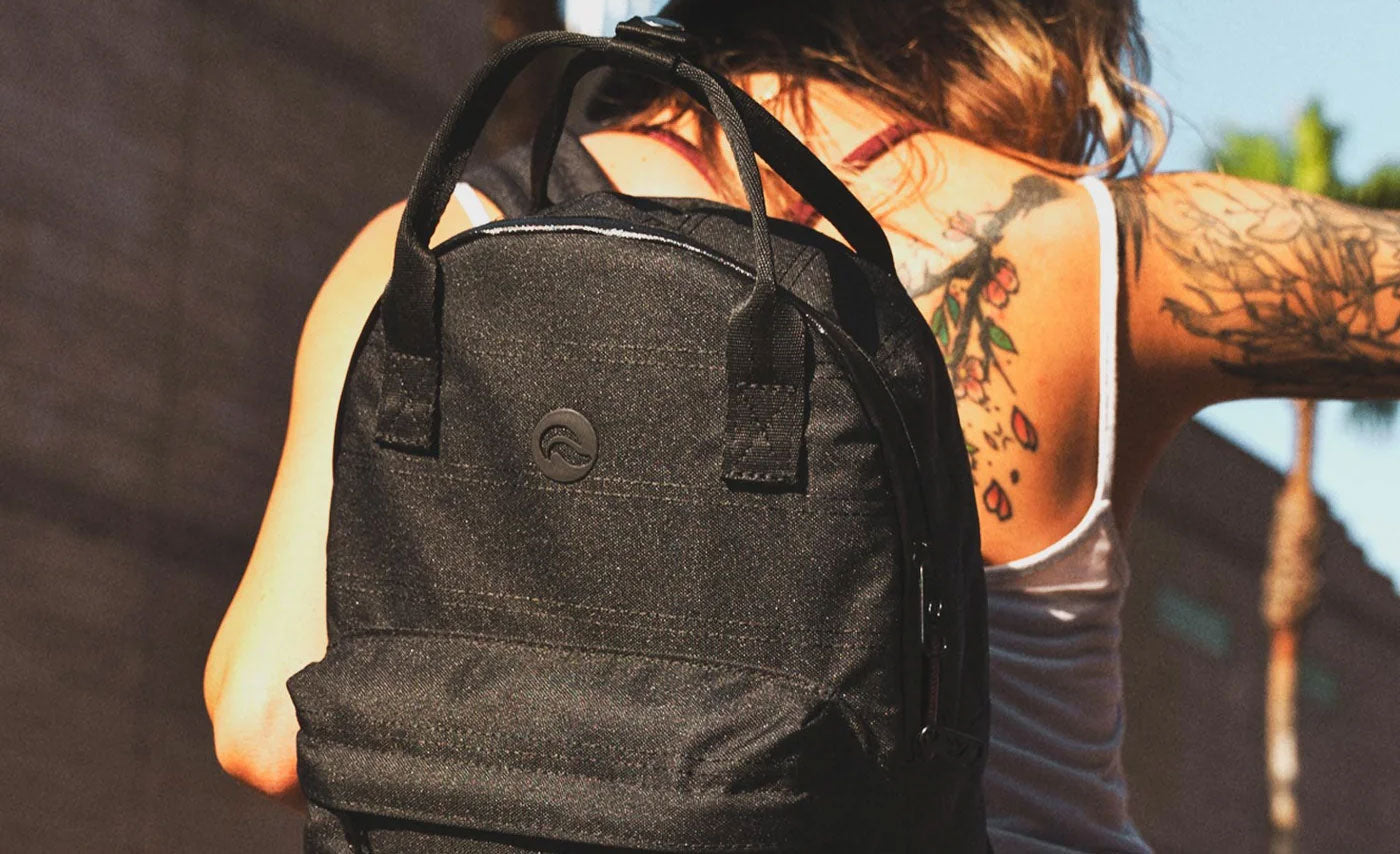
Search "smell proof bag" online and you'll find about a hundred brands telling you their bag is the one. Most of them aren't. Some are just regular bags with a marketing tag. Some have something inside that maybe slows the smell down for a few hours. A few are actually built to do the job.
If you're going to spend real money on a bag - and a real one isn't cheap - you should know what separates the bags that work from the ones that just say they do. Here's what's actually going on inside a good smell proof bag, and what to look for before you buy anything.
The thing that does the work: activated carbon
Activated carbon is what makes a smell proof bag actually smell proof. It's not a coating, it's not a spray, it's not a fragrance. It's a layer of carbon material - usually a fabric infused with carbon - built into the lining of the bag.
Carbon traps odor molecules at a microscopic level. Air can move through the lining, but the smell itself gets caught and held in the carbon. That's the whole trick. It's the same technology used in industrial air filters and gas masks. Real, tested, not marketing.
If a bag claims to be smell proof and the description doesn't mention activated carbon - or carbon lined fabric - you're probably looking at a bag with a strong outer zipper and a story.
What to actually check before you buy
Whether you're shopping Skunk or anywhere else, hold the bag to these standards:
- Carbon lining, not 'odor blocking technology.' If the product page is vague, the bag is vague. Carbon lining is a real, named material. Brands that use it say so.
- Sealed zippers, not just regular ones. A carbon lining only does its job if the smell can't escape around the edges. Look for zippers that overlap or seal — not just metal teeth and a flap.
- A built-in lock, not a luggage padlock taped on. If the brand cares about discretion, the bag has a lock built into the zipper system. Combination locks are better than key locks because you can't lose a combination at the airport.
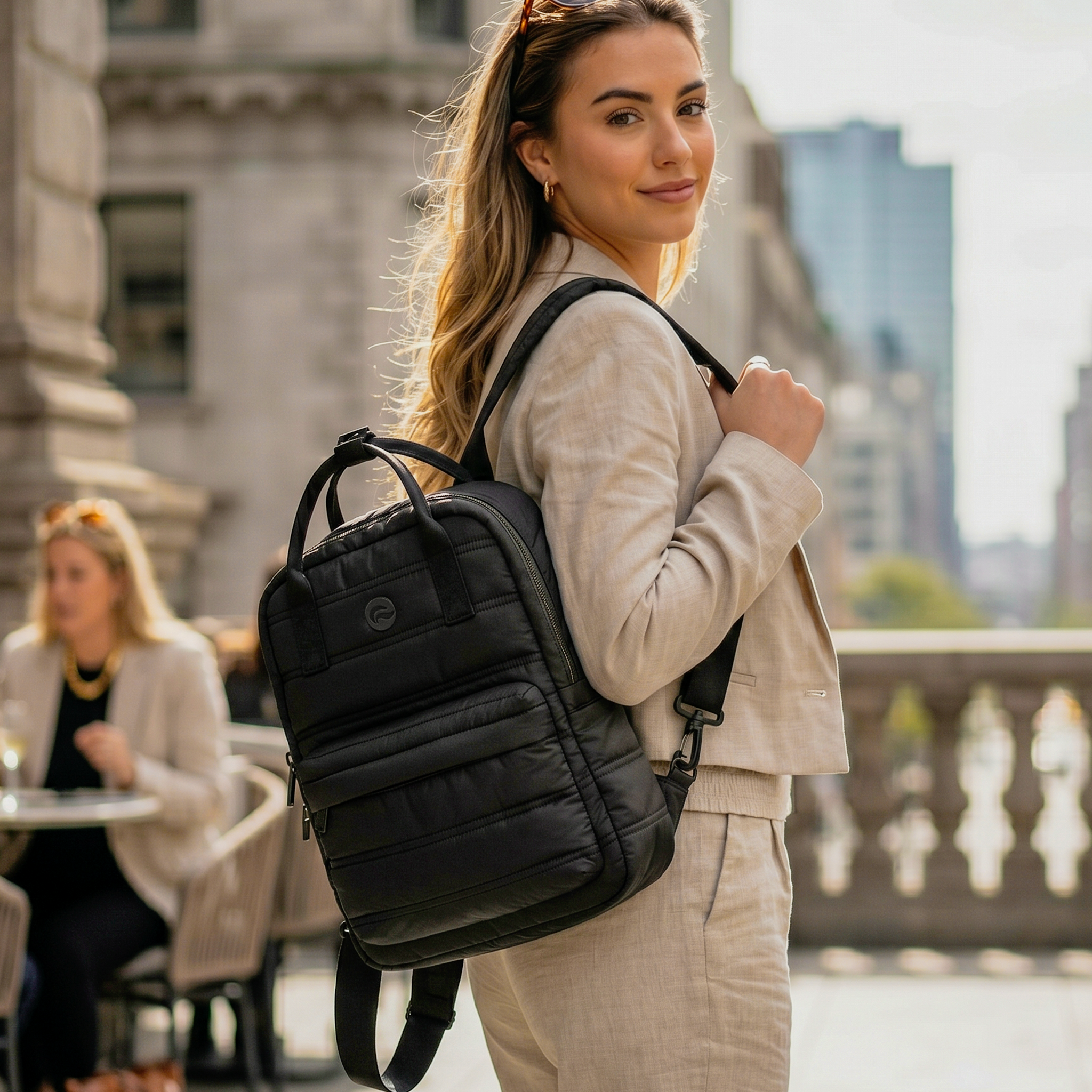
- Doesn't look like a 'smell proof bag.' This one's underrated. The whole point of discretion is that nothing about the bag tells the world what it does. If a bag has weed leaves on it, it's not a smell proof bag. It's a costume.
- Built to last more than a season. Real materials, reinforced stitching at stress points, hardware that doesn't feel cheap. You're going to be using this thing for years.
Things that don't actually keep a bag smell proof
- Scented liners. Adding a smell on top of a smell is not the same as containing a smell. Anyone within ten feet still knows.
- A regular zipper with extra thick fabric. The fabric helps. It's not the answer. Smell finds the seams.
- Plastic-feel waterproof bags labeled as smell proof. Water resistance and odor containment are different problems with different solutions. A bag that's good at one is not automatically good at the other.
- Mason jars and ziplocks. They work for the contents - kind of - but you still have to carry them in something. And now you've got a jar in your bag, which is its own problem.
Why everything else about the bag still matters
A smell proof bag isn't just a smell-proof bag. It's also the bag you carry to class, to the airport, to a friend's place for the weekend. It needs to do the regular bag job too.
That means:
- Padded straps that don't wreck your shoulders on a long day.
- A laptop sleeve that actually fits a laptop.
- Compartments that make sense - separate spots for what you grab often vs. what stays put.
- Water-resistant outer fabric, because life happens.
- Hardware that doesn't fall apart in six months.
A great smell proof bag does the discreet job invisibly while doing the regular bag job perfectly. If you have to choose between the two, the brand isn't taking either seriously.
Why the brand behind the bag matters
Smell proof is a category that attracts a lot of new entrants - print-on-demand brands, Amazon resellers, generic factories slapping a logo on a bag. Some of them might even be fine. Most aren't.
The brands worth your money have been doing this long enough to know what works and what doesn't. They've iterated on designs. They've heard from real customers. They stand behind the product.
Skunk has been making smell proof bags longer than most of the brands you'll see in search results have existed. That's not a flex - it's just relevant context when you're trying to figure out who to trust with money you actually want to spend well.
The takeaway
A real smell proof bag is engineering, not marketing. Activated carbon lining, sealed zippers, a built-in lock, and the quiet design of something that just looks like a regular nice backpack. Anything less than that, you're paying for a story.
Find yours at SkunkBags.com. Built to do the job, quietly.


Leave a comment
This site is protected by hCaptcha and the hCaptcha Privacy Policy and Terms of Service apply.