

Smell-proof bags have gone from niche accessories to premium everyday essentials. Whether you’re a frequent traveler, a student, or someone who values discretion and durability, the right bag makes a real difference. This guide walks through how to choose a smell proof bag in 2026 - focusing on what actually matters: size, lock quality, carbon grade, and the right format for your life.
The Science Behind Smell-Proof Technology
Smell-proof isn’t about masking odors it’s about trapping them at the molecular level. Skunk’s SK9 Tech® system is built on the CarbonClean® activated-carbon formula, with a surface area of ~1,500 m²/g — 2–3× higher than many competitors. Odor molecules are adsorbed into the carbon’s microscopic pores and held there (the adsorption mechanism is documented in the journal Carbon) - contained inside the bag, not masked or merely delayed.
Paired with the CarbonFlow® one-way lining which lets air reach the carbon while keeping loose carbon dust off your gear that’s a system imitators with thin, generic carbon fabric can’t match.
Size Matters: Matching the Bag to Your Life
Size is your first decision. Skunk offers a wide range, so start with how you actually carry:
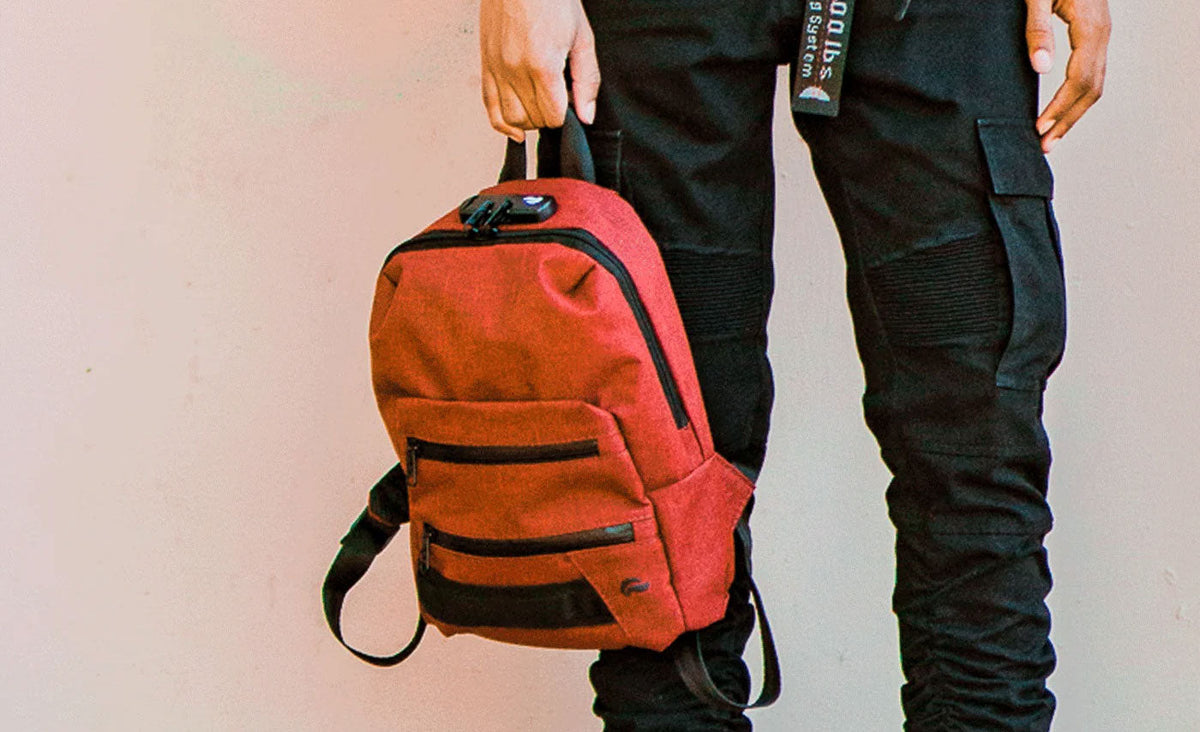
- Backpacks: daily commuting, flights, or dorm life - compact yet spacious, balancing portability with odor-proof discretion.
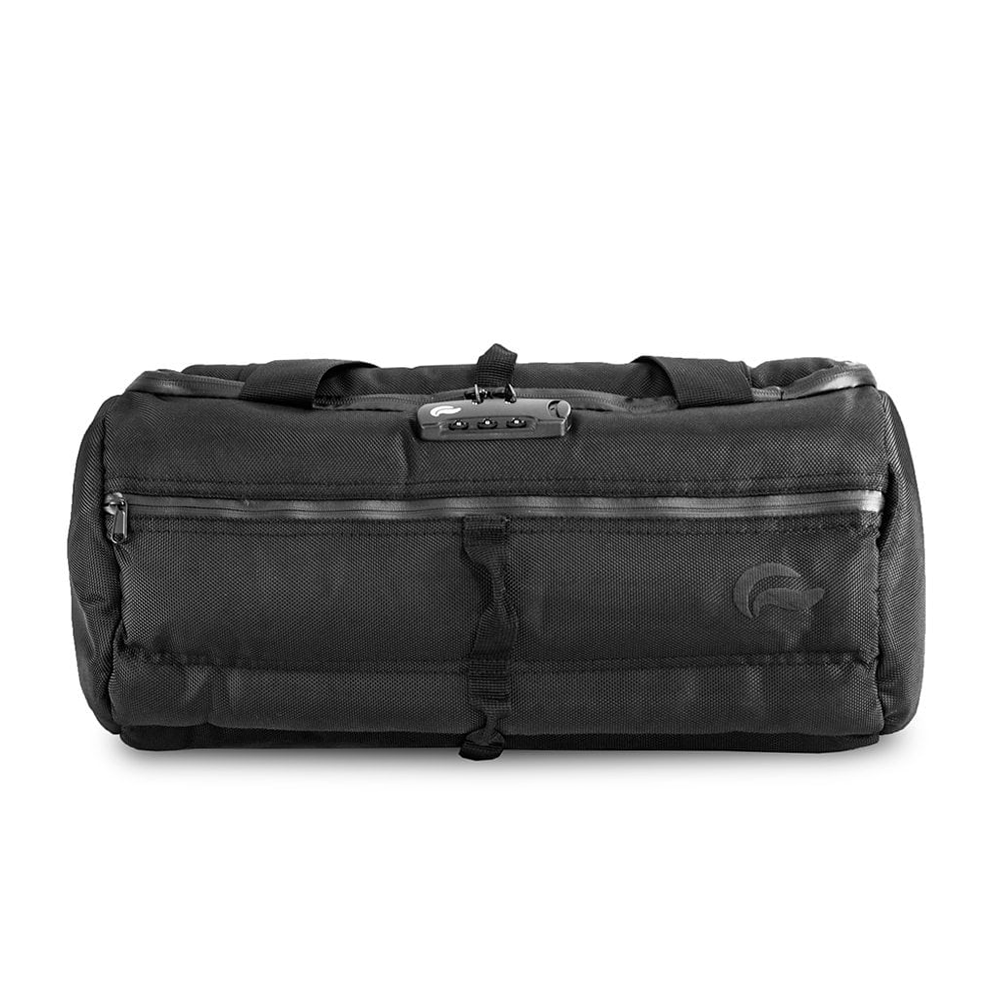
- Duffles: road trips, gym sessions, weekend getaways — bigger capacity for more gear, with odor contained inside.
- Cases: valuables, accessories, or smaller items targeted odor control with maximum portability.
Think about your routine: books and electronics daily, or sports gear for long trips? Your lifestyle sets your size.
Lock It Down: Why YKK Zippers + Combo Locks Matter
Security matters as much as odor control. Skunk says it was the first smell-proof bag company to integrate combination locks directly into its designs - and in 2026, that’s close to non-negotiable. YKK zippers, the gold standard, hold up under stress; an integrated combination lock built into the bag removes the need for a flimsy padlock and gives you peace of mind at airports, gyms, or in shared spaces.
If you’re leaning backpack, the Rogue pairs SK9 Tech® odor control with a built-in combo lock - a strong pick for travelers who want both discretion and security. (For air travel specifically, Skunk’s Escape travel bag adds a TSA-ready lock.)
Carbon Grade: The Hidden Factor That Defines Quality
Not all activated carbon is equal - and this is where most “smell-proof” bags quietly fail. Many use carbon meant for water filtration, which does little for odor. Founder Alise learned this firsthand: sourcing and testing carbon from around the world, he found most “smell-proof” bags used thin, ineffective material - so Skunk engineered the CarbonClean® formula from scratch, at a surface area of ~1,500 m²/g versus roughly 500–700 m²/g in cheaper alternatives.
Why the gap matters:
- High surface-area carbon: adsorbs odor molecules efficiently, for genuine, lasting smell-proof performance.
- Low surface-area carbon: partial odor reduction — often only 30–40%.
When you’re choosing a bag, look for the carbon spec. If a brand won’t disclose it, that’s a red flag.
Backpack vs. Duffle vs. Case: Which Format Wins?
The right format comes down to your use case:
| Format | Best for | Example from Skunk |
|---|---|---|
| Backpack | Daily carry, commuting, flights, festivals | Nomad, Rogue |
| Duffle | Road trips, gym, weekend getaways | Weekender, Midnight |
| Case | Small valuables, accessories, discreet storage | Sidekick |
Backpacks offer versatility, duffles maximize capacity, and cases offer precision. It comes down to whether you prioritize portability, storage, or discretion.
The Comparison Shopper's Checklist
In 2026, buyers want proof of performance, not just a product. Run any bag through these four checks:
- Transparency: does the brand disclose carbon grade and construction?
- Durability: are the zippers YKK? Are the seams sealed against moisture?
- Security: is the lock integrated, or an afterthought?
-
Lifestyle fit: does the format match your daily or travel needs?
Skunk is built to pass all four - which is what makes it a go-to for buyers who actually compare.
Real-World Picks
- Student life: the Urban keeps books, electronics, and personal items discreet and secure.
- Weekend warrior: a Weekender or Midnight duffle keeps gym gear and road-trip essentials odor-free, even in a packed car.
- Traveler’s companion: the Nomad, with SK9 Tech® carbon and a combo lock, is built for moving through airports with confidence.
Final Word: Choosing Confidence
The best smell proof bag isn’t just about carrying your things - it’s about carrying them with confidence. When you’re deciding how to choose a smell proof bag, remember four things: match the size to your lifestyle, demand YKK zippers + a combo lock, verify the carbon grade (~1,500 m²/g surface area), and pick the right format - backpack, duffle, or case.
Explore the full range at SkunkBags.com and choose a bag engineered for discretion, durability, and style.
FAQ
What should I look for when choosing a smell-proof bag?
Four things: the carbon grade (surface area — Skunk’s CarbonClean® is ~1,500 m²/g, 2–3× generic carbon), an integrated combination lock, YKK zippers, and a format that fits how you carry. If a brand won’t disclose its carbon spec, be skeptical.
Does carbon grade really matter?
Yes, it’s the single biggest quality factor. High-surface-area carbon adsorbs odor efficiently and lasts; low-grade or water-filtration carbon often manages only 30–40% odor reduction. The surface-area spec is the tell.
Backpack, duffle, or case - which should I get?
Backpack for daily carry and travel, duffle for the gym and weekends, case for small valuables. All use the same SK9 Tech® carbon system; pick by capacity and how you move.
Do smell-proof bags come with a lock?
Most Skunk bags include an integrated combination lock on the double YKK zippers. For air travel, the Escape travel bag adds a TSA-ready lock. A few smaller specialty items may not include a lock - check the product page.
How long does a smell-proof bag stay effective?
The carbon typically performs for about 6–9 months per cycle, then can be re-activated with gentle heat - so a quality bag lasts years, not months.

Leave a comment
This site is protected by hCaptcha and the hCaptcha Privacy Policy and Terms of Service apply.